What makes a website good or bad, not visually but performance-wise?
- Sep 30, 2025
- 5 min read
Even for websites that look fine at first glance, when you talk to the company management, very often performance tells a different story. Some websites don’t convert. Some confuse users. Some frustrate users; ever visited one of these restaurants websites where you can't book a table in two clicks and you have to call them, but they're not open yet? Some confuse AI. Others simply vanish from search engine results, invisible to anyone who matters.
We have seen cases where some actively damage credibility without the business even realizing it. It's pretty ironical that many of these sites are expensive, built by developers or designers, signed off by leadership, and then left untouched for years. This article isn’t about visual taste: it’s about performance. It’s about whether your website is helping your business grow, or just silently sabotaging it.

Most websites are either annoying, forgettable, or broken: what makes them good or bad?
A good website builds trust instantly. It tells the visitor: "We understand your problem, we know what you’re looking for, and here’s exactly what to do next."
A bad website doesn’t just frustrate. It sends a subtle but damaging signal: this company doesn't have it together. It's not deliberate, but it’s enough to make someone bounce and choose a competitor.
And then there’s the worst category: the site that looks fine but performs poorly. It loads. It displays. But it doesn’t bring in leads. Or customers. Or any form of progress. It's inexistent. It's pretty failure on repeat.
What makes a good website?
Let’s be clear: good websites are not judged by aesthetics alone. They’re judged by how well they move a business forward.
A good website:
Shows a clear value proposition above the fold: the user immediately knows what the business does and who it’s for
Loads quickly, works perfectly on all devices, and eliminates friction in the first 3 seconds
Uses precise, benefit-driven headlines that speak directly to real-world problems the visitor is facing
Offers a simple and focused navigation, guiding the visitor toward action, not distraction
Aligns calls to action with the mindset and urgency of the visitor: "Get a quote" for decision-makers, "See how it works" for explorers
Integrates into a follow-up system, whether it’s a CRM, automation flow, or smart nurturing sequence
And here’s the part most agencies miss: the main readers are not human anymore, not even traditional search engines (SEO the good old way).
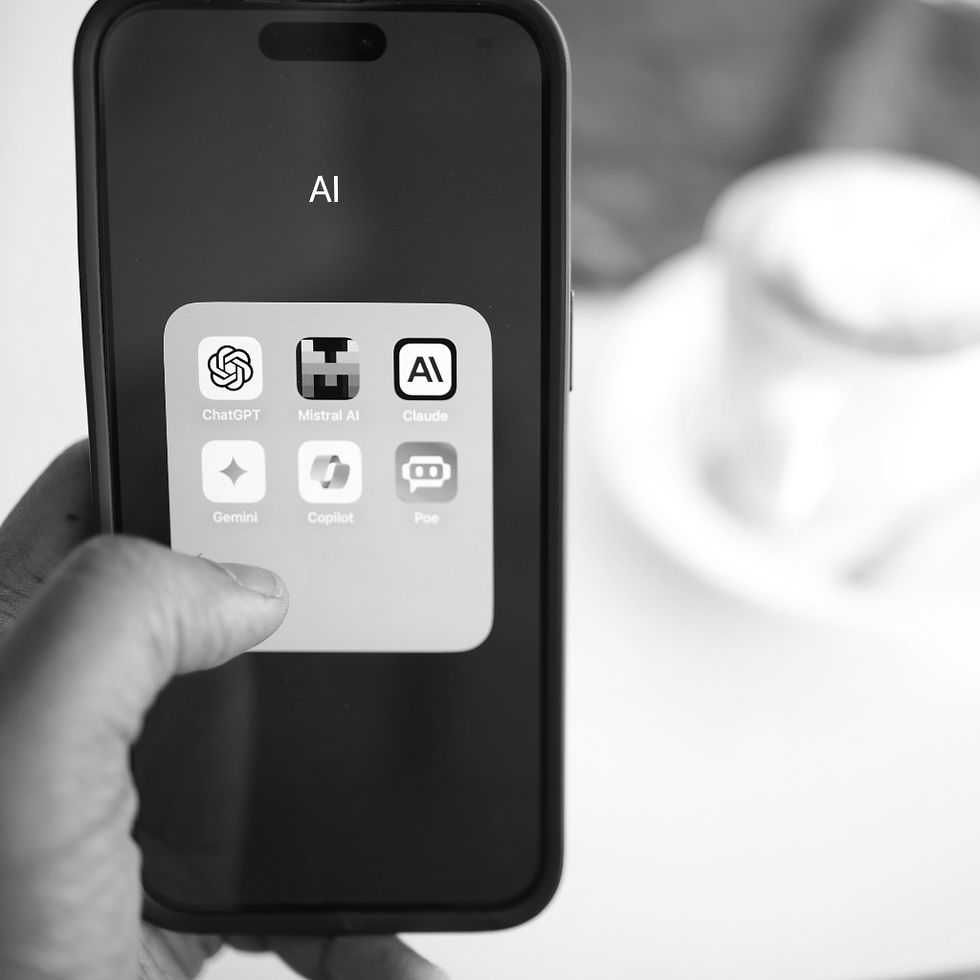
Today, your site is also read by AI. AI-powered search engines, chatbots, and answer engines are scanning your content, understanding your structure, extracting your facts, and ranking you accordingly. A good website today includes a semantic layer that speaks clearly to both humans and machines.
It's crucial to build websites with an AI-readable SEO foundation, distinct from the user-facing content but deeply connected to it. This dual approach is no longer optional. It’s how visibility works in 2025. It's what, in an invisible way, makes the difference between a good or a bad website.
What makes a bad website?
Bad websites aren’t always obvious. Many look fine: slick visuals, clean fonts, even smooth animations. But they fail where it counts. A simple rule to evaluate any website: it shouldn't just show who the company is, it should perform what the company does.
Here are the main red flags:
The homepage speaks only about the company, not the client
Content is vague: "we offer solutions" instead of naming specific problems and outcomes
Calls to action are generic: "Contact us"
There’s no sense of direction: no funnel, no segmentation, no path forward
Performance is sluggish on mobile, and elements break depending on the browser
There is no automation, no CRM integration, no smart data capture
One more? There’s no SEO strategy and no AI layer, just guesswork and hope. That’s a major loss, especially now that AI-powered engines and search assistants are becoming the new way people discover businesses (for example, the reason why we tested Apollo.ai is because ChatGPT recommended it.)
Simply put: a bad website fails to convert AND creates a false sense of progress... while the reality is that it quietly erodes—if not actively sabotages—opportunity.
5 most common website failures we see
We rebuild websites every month. Not because they looked outdated, but because they didn’t perform. And in 90% of cases, the issues weren’t technical, they were strategic.
Here’s what we see again and again:
Sites built as design projects, not business tools
Sites built as technical projects, not engaging user experience
Content that tries to sound impressive instead of being clear
No marketing CRM, no follow-up sequences, no funnel logic
No content structure readable by search engines or AI models
Analytics either missing, misconfigured, or completely ignored
Sometimes, companies think they’ve "checked the box" by launching a site. But if that site doesn’t feed your pipeline, inform your team, and grow your visibility, it’s not an asset. It’s a liability with a nice background image. The days where we built website like online brochures with a contact field are long, long gone.
Want to know if your website needs rebuilding?
You don’t need to be a developer or SEO expert to figure it out. We’ve condensed the essentials into one strategic document:
Inside, you'll find:
A clear checklist of what every modern website should include
The 3 invisible traps that most sites fall into (and how to spot them)
A diagram of how your website should fit into a larger ecosystem
A guide to diagnose what needs fixing, or whether a full rebuild is the smarter move
If you suspect your website isn’t pulling its weight, this will clarify what to do next.
A good website does 3 things exceptionally well
It doesn’t matter whether you’re a SaaS platform, a consulting firm, or an industrial company. If your website does these three things, you’re in a good place:
It attracts the right people
Through smart content, technical SEO, and now, AI visibility
It converts them without effort
With messaging that speaks to them and CTAs that match their stage
It feeds the rest of your system
Captures leads, tags them, and triggers the right sequence
If your website isn’t doing all three, then it’s not doing its job. You might be pouring money into ads, social, or sales outreach; but if they all land on a weak site, you’re bottlenecking your growth.

About the author
Manelik Sfez, founder of the Swiss brand consultancy Ultrabrand, brings 25 years of international business, marketing, and brand strategy experience to the table. He has worked with some of the world’s most iconic brands throughout his career. From luxury goods to global retail, financial services and technological and industry giants, he has guided companies through brand-led transformations that have enabled significant business growth.


Comments